GyeongGi Cultural Foundation
People appeared in the land of Gyeonggi!
The 2020 Joongbu Ilbo series 〈Gyeonggi-do Museum〉 is a content produced in a total of 10 series by the GyeongGi Provincial Museum, which has undergone a complete reorganization of the exhibition hall in celebration of the 25th anniversary of its opening. If you would like to see more detailed 〈Gyeonggi Province Museum〉, you can enjoy it in the original text on the Jungbu Ilbo website. |
People began to live in the Gyeonggi area from the Paleolithic era, hundreds of thousands of years ago. The traces of life in the Paleolithic era are found in large rivers such as the Hantan River, the Imjin River, and the Han River and their tributaries. The exhibition at the GyeongGi Provincial Museum begins at this time when human traces are first identified on the grounds of Gyeonggi Province. The exhibitions in the prehistoric and ancient chambers highlight the history of Gyeonggi from the Paleolithic era to the Unified Silla period under the theme of “prehistory and ancient GyeongGis”. Among them, the part to be introduced in this issue is about prehistoric times. This reorganized exhibition reflects the results of Gyeonggi-do's latest excavation research and gathers important Gyeonggi-do materials that have not been previously seen at the GyeongGi Provincial Museum. In the prehistoric era, Gyeonggi land was the first place in Korea where a fist ax was discovered, which led to a turning point in research in the Paleolithic period, and an important space that blossomed so that the comb pattern pottery and agricultural culture representing the Neolithic era could spread to the southern regions. to be. In this reorganized exhibition, a new exhibition structure was created by paying attention to the characteristics of the prehistoric times of Gyeonggi-do. Prehistoric exhibitions are conducted in the direction of examining stone and earthenware, an important group of relics explaining the prehistoric times, and introducing the lives of the people of Gyeonggi-do at the time and the society becoming more complex as time goes by.
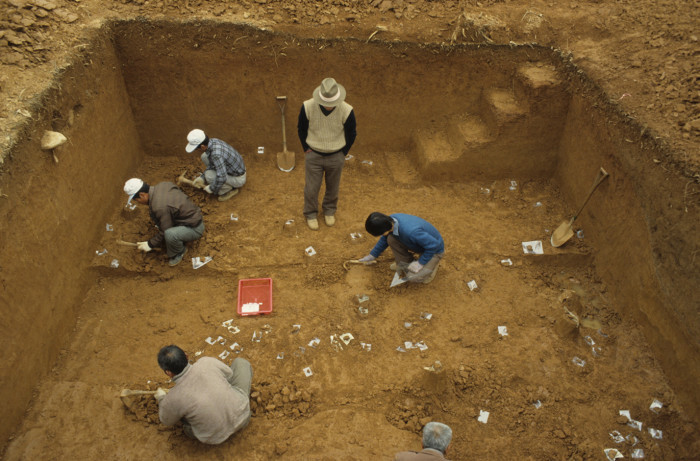
[Photo] Yeoncheon Jeongok-ri Ruins
Furthermore, it is a relic that represents the Paleolithic era of Korea. At the site of Jeongok-ri, a fist ax was discovered for the first time in East Asia.
Stone and earthenware of prehistoric people
Humans are animals that use tools, and without tools they are insignificant, and with tools, they are enormous.
-Thomas Carlyle -
People in the Paleolithic era used stone tools, a tool made of stone. In the early days, large stone tools such as knuckles, cutlery, and multi-face stoneware were manufactured using rough stones that are readily available in the vicinity. However, as time goes by, small and sophisticated stone tools such as tangs and stone blades are used by using a high quality stone texture that can be processed in detail. People in this era did not stay in one place for long and lived by moving along places where food was abundant. They hunted animals and collected plants using stone tools to obtain food.
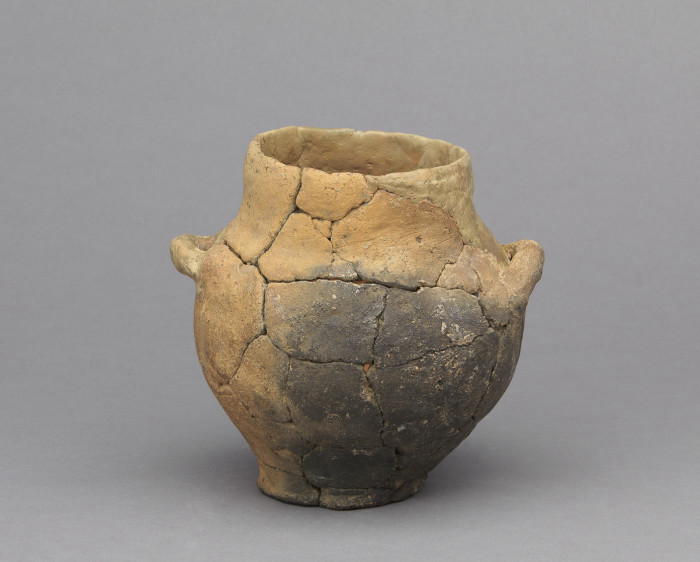
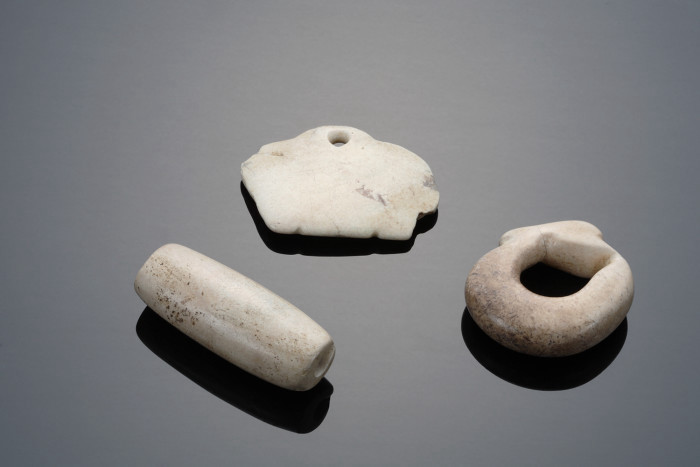
People in the Neolithic Age first used earthenware. Earthenware is a bowl made out of earth and then roasted. The invention of earthenware drastically changed the way people lived in prehistoric times. The activities of cooking, storing and transporting food, farming, and settlement can begin. People in the Neolithic period used comb-patterned pottery in which various geometric patterns such as triangular patterns, grid patterns, and radiation patterns were engraved on pottery. Meanwhile, people of the Bronze Age used plain pottery with little decoration on the surface. However, functionally, they were further differentiated, and red kanto ware and eggplant pattern pottery used for burial rituals were also made.
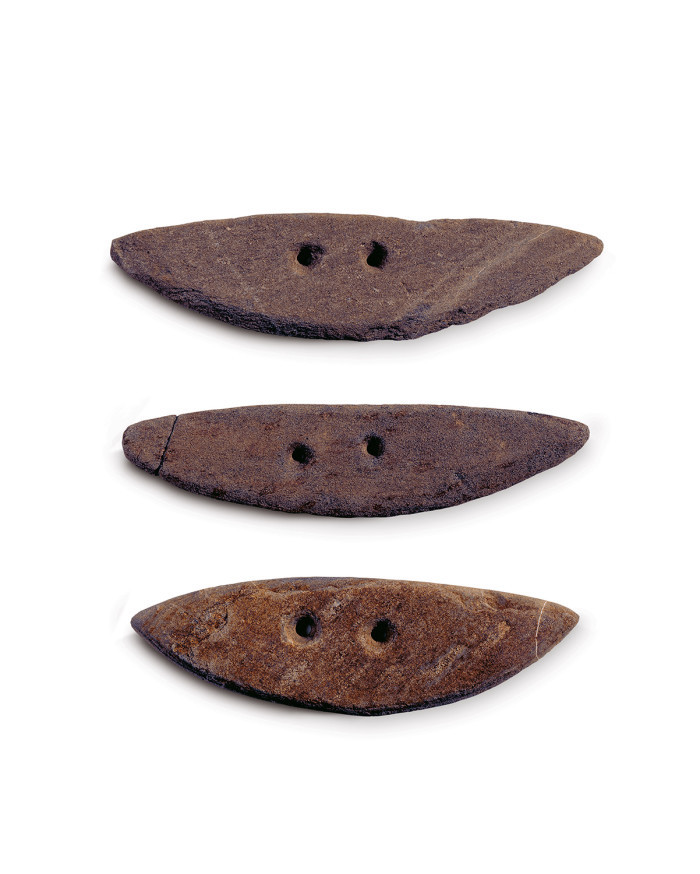
[Photo] Half-Moon Shaped Stone Knife (Excavated from Yeoncheon Intersection)
The vandal stone sword is a representative agricultural area of the Bronze Age. The raw part was used to harvest grain.
The livelihood and settlement of Neolithic people
In the prehistoric era, he earned a living through hunting, fishing, and gathering. It is known that people in the hunter-gathering society use food around a 10km radius around their residence. The Gyeonggi region became the home of the Neolithic people's lives from early on, because abundant food was available from the tidal flats of the Han River and the west coast. They made arrowheads and spears to hunt animals, and made nets with net weights to catch fish. Plants, shellfish, etc. that did not require any special tools were actively collected.
Meanwhile, the people of the Neolithic period began farming and pastoring food for the first time in human history. It is estimated that the farming at this time was a rudimentary level of field farming for cultivating various grains such as jo and gijang. Recently, in the Gyeonggi area, many large-scale village ruins, such as Paju Daeneung-ri, Ansan Singil-dong, and Hwaseong Seokgyo-ri ruins, were found.
Scenery of Bronze Age Village
Agriculture has since become the leverage of the tremendous development experienced by human societies.
-Bruce Smith -
People in the Bronze Age lived in villages in alluvial areas along rivers and in mountains or hills. In the early period, many large rectangular houses were built, but as time passed, more and more small houses with round and square shapes. Production facilities, storage buildings, plazas, wooden fences, and tombs were built around the village. Compared to the Neolithic era, the biggest difference in the livelihood economy is that farming began in earnest. Various grains such as rice, barley, wheat, and soybeans and harvesting tools such as half-moon stone knife and stone sickle have been identified in the ruins. Tools for wood processing have also been developed, and many wooden tools such as hatchets, blades, chisels and axes are excavated.
People of the Bronze Age first used bronze ware, mainly using plain pottery and tidal pottery. Dolmen, which required a lot of labor to make, were erected, and cheers and fences were built to defend the village. In addition, specialized tools and weapons were used according to their function, and when farming began in earnest, the degree of social complexity increased significantly compared to the previous period. As groups were divided and powers with economic wealth emerged, conflicts between individuals and groups also arose.
Ironware, the Beginning of a New History
By 300 BC, ironware culture came from China's Yan Dynasty. Although ironware was spread, this period when the Bronze Age culture reached its peak is also called the "Early Iron Age." People lived in relatively high places where they could have a good look around. The ruins of Banje-ri in Anseong are representative. The characteristic relics of this period were clay pottery, long-necked pots, and black pottery. In addition, various types of bronze ware are identified, including Sehyeong-dong sword (Korean-style bronze sword). The emergence of ironware was to herald the beginning of a full-fledged historical era based on ironware culture.
<Copyright(c)2002 GGC All rights reserved.>
- Writer
- GyeongGi Cultural Foundation
- About
- Everything about the GyeongGi arts and culture, GGCF
- homepage
- https://www.ggcf.kr/