GyeongGi Cultural Foundation
Incheon_ A Modern Legacy to Heal the Cracks of the Era
Workers' Residences of Bupyeong
As a province adjacent to Seoul, the country's capital city, Gyeonggi-do has inherited a vast amount of Korea's modern cultural heritage as the country has undergone a turbulent modern history, ranging from the latter part of the Joseon Dynasty to the Japanese Occupation Period followed by the national liberation and division, the Korean War, and the impressive industrialization and democratization processes. “Modern Cultural Heritage of Gyeonggi” will feature an introduction to the modern culture of Gyeonggi-do together with a discussion about the history, identity and values of the Province in terms of cultural heritage. |
writer | Ye-sun Choi
Bupyeong is a place that arouses a lot of questions. Since the end of 1930, when the arsenals and munitions factories were built, the ASCOM (United States Army Support Command) came in and formed a military camp town, of which we can still find vestiges left here and there. The houses of the laborers who worked at the arms factory became the camp itself, a living foundation. Then, in the 1970s and 80s, when the factories were founded for the export industrial complex and for Daewoo Motor Company, newcomers flocked into the city for a season before dispersing. And now, Bupyeong is standing at a crossroads to decide whether it is going to remember the hard lives of the laborers.
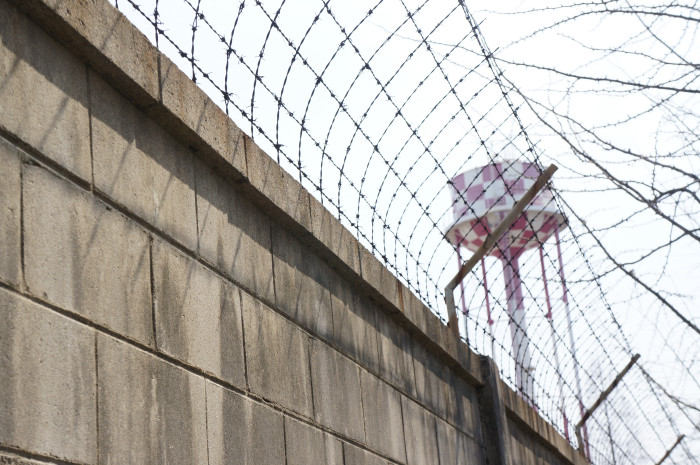
Bupyeong, standing at the crossroads of an era
Incheon is a city that, historically and geographically, cannot be explained separately from Gyeonggi-do. It was raised in status to Incheon-si (city) in 1981, apparently separated from Gyoenggi, and Ongjin-gun, some islands, and Gimpo, regions once under the administration of Gyeonggi, were included in Incheon and extended its land area. However, the life of Incheon is still in connection with Gyeonggi despite the administrative distinction. After the separation, the most remarkable change that was made is that Incheon turned into a city of industry, offering various footholds for enterprises.
And what part would Bupyeong have played in the deep and colorful history of Incheon? Under the Joseon Dynasty, the dohobu (protectorate) independent from Incheon was established in Bupyeong, and its territory was as large as to include current Bupyeong-gu, Gyeyang-gu, and Seo-gu of Incheon, Gangseo-gu and Guro-gu of Seoul, and Bucheon-si of Gyeonggi-do. The center of Bupyeong at the time was the area around Gyesan, near the Hangang River, and today’s Bupyeong was located on its outskirts. Thus, it is clear that Bupyeong is a city that was developed in the modern era. Bupyeng Station on the Gyeongin Railroad was constructed for its geometrical advantage of linking Seoul and Incheon, and in 1930 the arsenals and munitions factory were built, allowing the rapid growth of the city. Despite the ebb and flow of the population, Bupyeong is the city with the largest population in Incheon (544,606 as of August 2017).
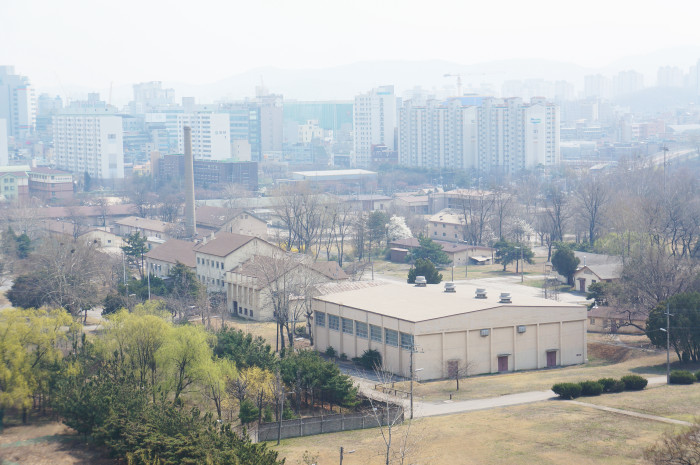
Landscape of camp market in the Bupyeong military base
“Migration” should be a keyword to describe Bupyeong. Many came into the city to become factory workers and merchants as the industrial complex was built in it according to the plan of the Japanese Empire, and when ASCOM took a part of it to set up arsenals, even more laborers rushed in to work in the base. In the 1970s, the U.S. Military Base was moved to places like Osan and Pyeongtaek, after which export industrial corporations and automobile factories were built instead, stimulating a generational shift of workers. As the history of our nation itself can’t be written without migration, so the history of Bupyeong could be a microcosm of our national history.
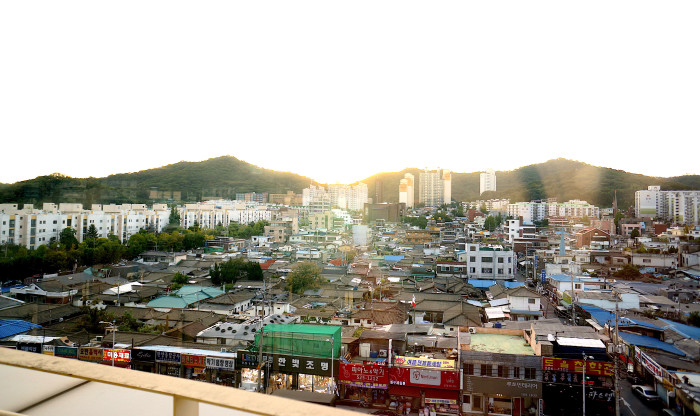
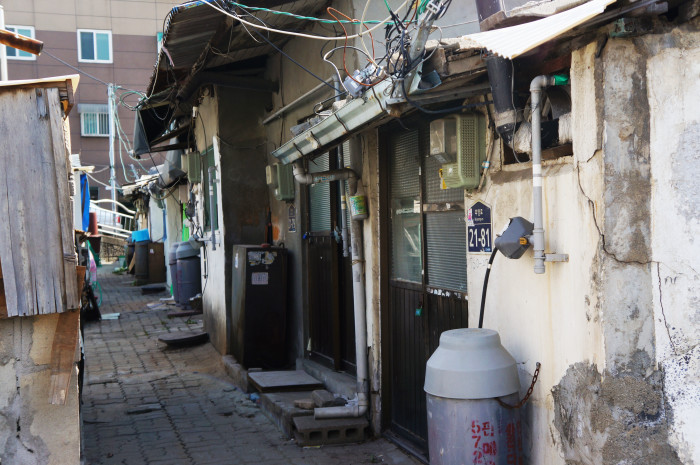
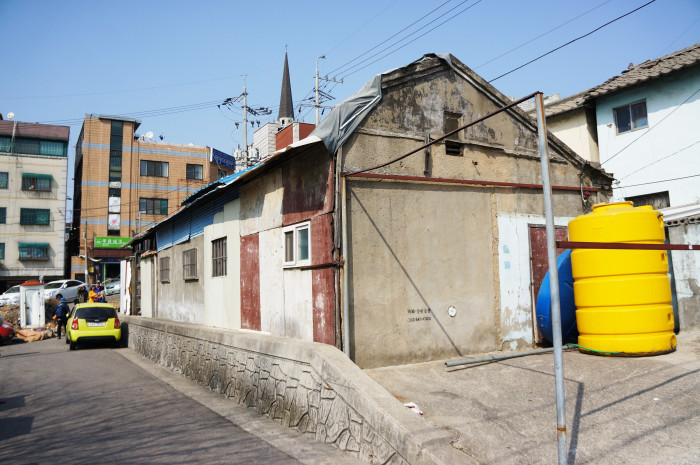
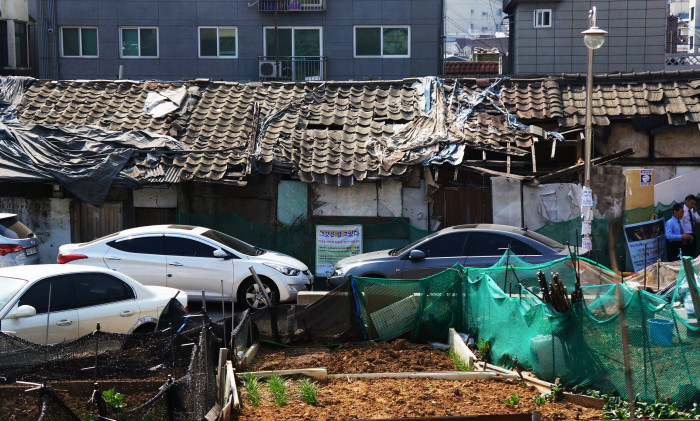
Laborer’s housing in Sangok-dong. The original structure remains intact.
The main class that migrated was the working class. Those who gathered in Bupyeong following its structure of industry have already dissipated, but their houses left various traces behind and constituted present day Bupyeong. The employee residences—Samneung Housing in Bupyeong 2-dong, Sinchon (once a military camp town) in Bupyeong 3-dong, and Corporate Housing in Sangok-dong—are a significant modern legacy of architecture in Bupyeong, the city once called the City of Samneung, then ASCOM City, and finally the export complex city, which tells us about the city’s complicated understructure.
A Trace of the Pacific War, Samneung Residence for Laborers
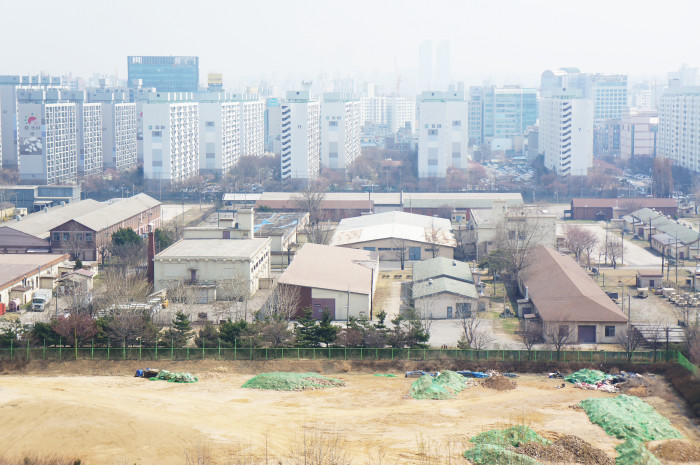
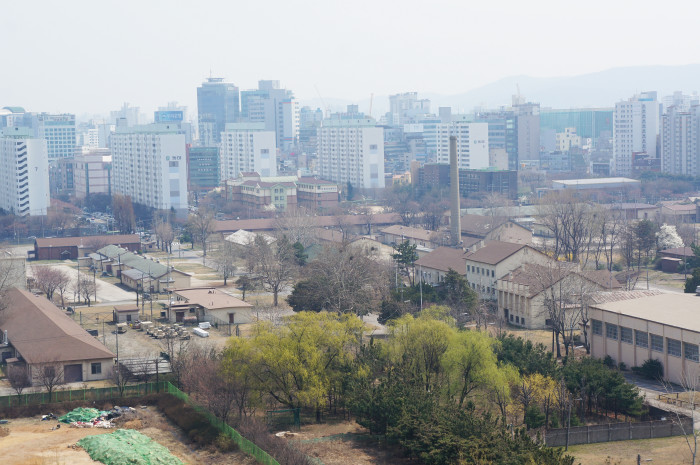
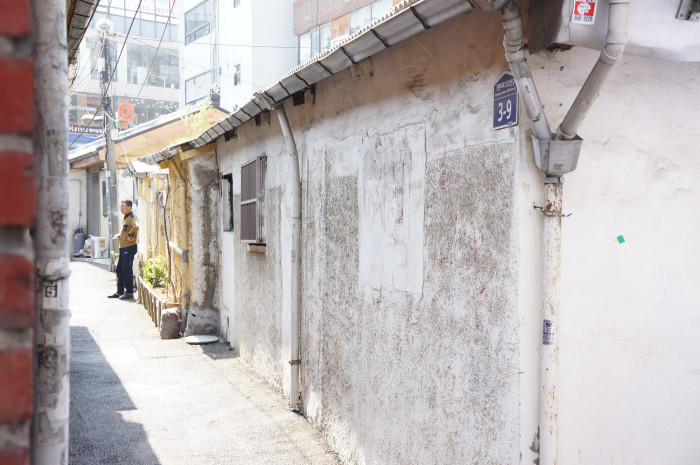
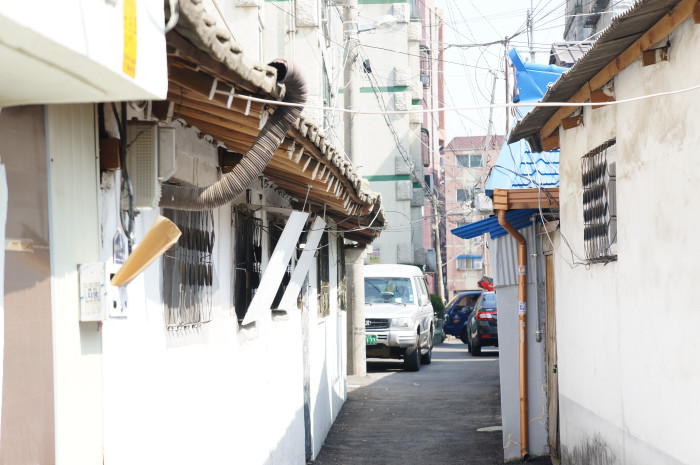
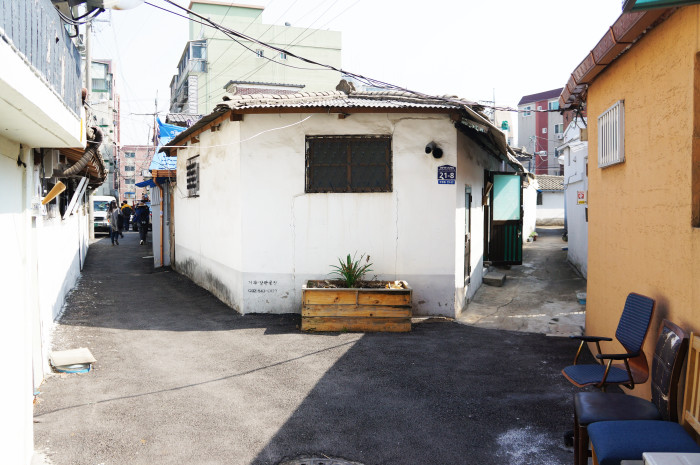
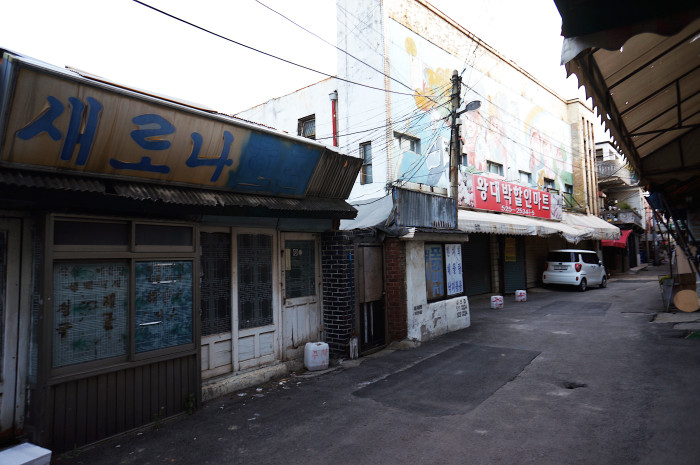
Incheon has 97 remaining sites from the Pacific War including factories, railways, military facilities, and mines. Among them, 19 are in Bupyeong, most of them being arms factories and residences. The arsenals are the manufactory of arms and the historic sites of compulsory mobilization. The whole area around Bupyeong 2-dong is called “Samneung(三菱)”, written with the Chinese characters corresponding to the Japanese ‘Mitsubishi’ today. While some stores have signs reading ‘Samneung’, some of the so-called “Samneung Julsataek” row houses still remain undisturbed. After the Mitsubishi factory was demolished, the Korean Army 88 Maintenance Unit was stationed there, and Bupyeong Park was later created, but there are still old laborers’ residences here and there that testify to the cracks of the era.
The history of Samneung Village starts in 1937, with the factory and residences of Hironaka Commerce and Industry, which manufactured trains and the machinery for mines. The company's stock grew strong thanks to the gold mine development plan of the Government-General of Joseon, establishing their second factory while expanding its factory in Gyeongseong. The number of workers in the new factory was up to 1,088, so it was necessary to build employee residences, bunkhouses, and public baths. The sudden expansion in business resulted in financial loss, and Mitsubishi Heavy Industries, the leading company of the military industry in Japan, bought the factory. The factory was renamed Mitsubishi Steel Manufactory of Bupyeong in 1942, and manufactured not only bulletproof steel plates and breakwater plates but also mortar by the end of the Pacific War, furnishing them to the Japanese army.
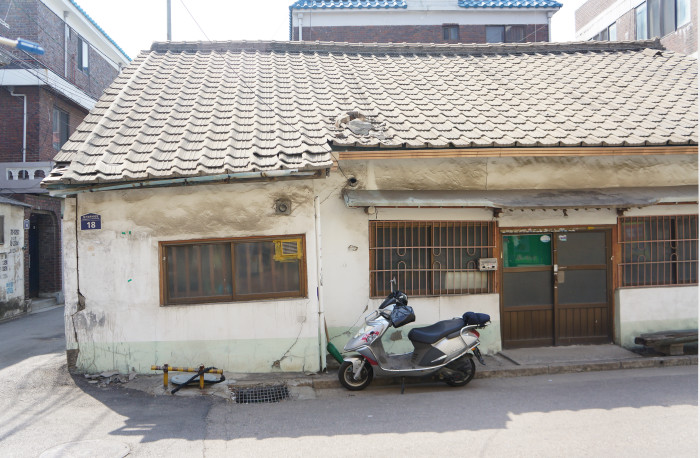
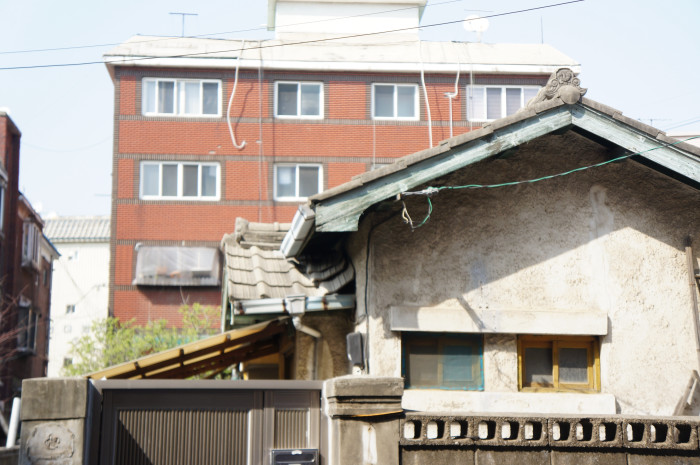
Samneung residence(up) and townhouse(down)
<Copyright(c)2002 GGC All rights reserved.>
information
Modern Cultural Heritage in Gyeonggi-do
Writer/ Ye-sun Choi(Cultural heritage columnist)
keywords
- Writer
- GyeongGi Cultural Foundation
- About
- Everything about the GyeongGi arts and culture, GGCF
- homepage
- https://www.ggcf.kr/